Crazy Time Live Casino in the UK: What to Check
 Available in GB
Crazy Time’s availability, rules, demo access and payment conditions depend on the operator, so product details and venue claims need separate checks.
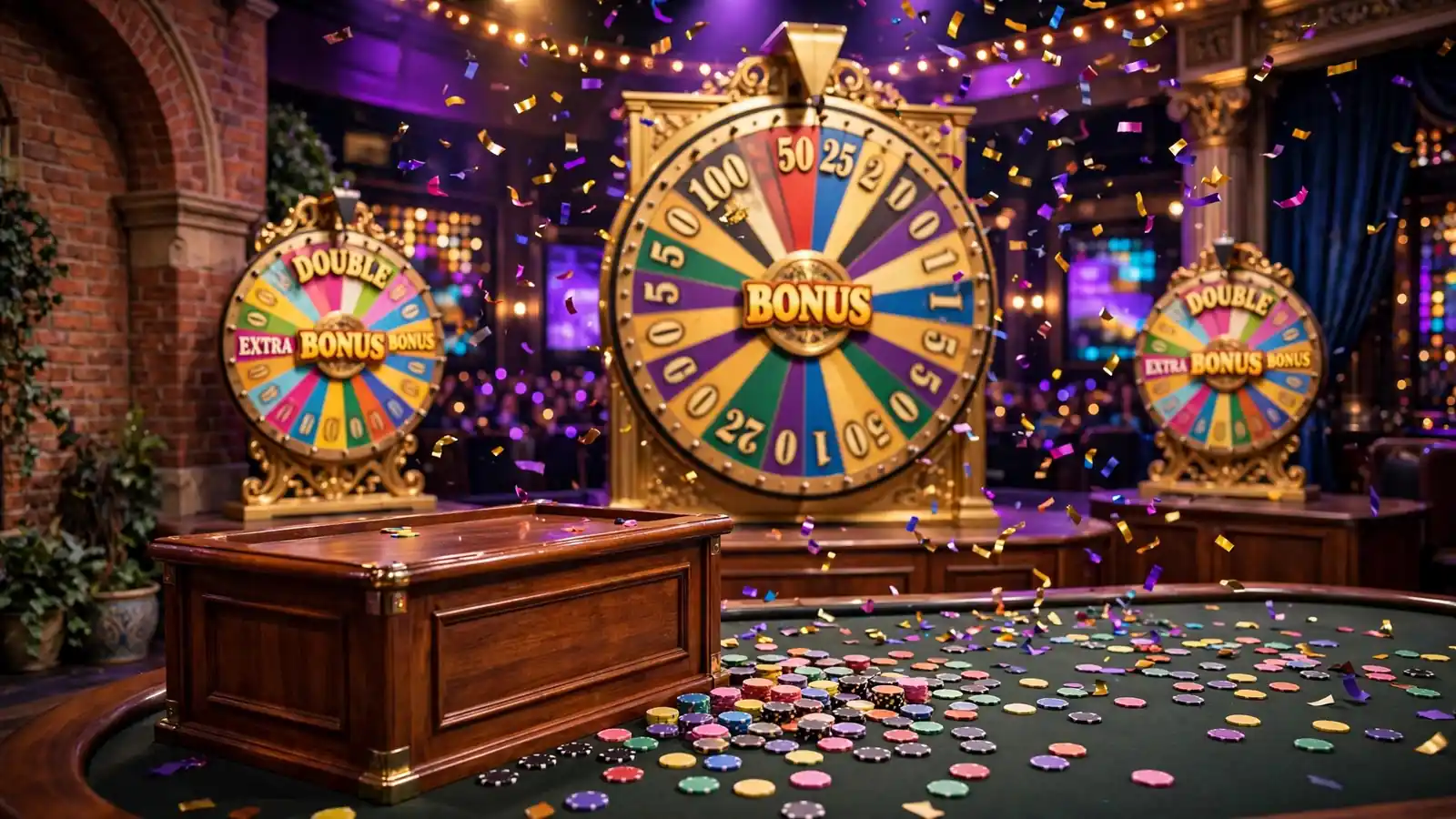
Table of Contents
- Crazy Time and the Evidence Available for UK Players
- How Live Casino Games Fit the UK Online Casino Market
- Checking a Casino’s Licence Before Depositing
- Assessing Sites That Offer Crazy Time
- Finding Crazy Time in a Casino’s Live Games
- What Can Be Said About Crazy Time Rules and Slot Limits
- Strategy Claims and the Limits of the Evidence
- Free Play and the Difference Between a Demo and Real-Money Play
- Bonuses, Deposits and Payment Restrictions
- What a Crazy Time Demo Can—and Cannot—Establish
Crazy Time and the Evidence Available for UK Players
Crazy Time is a live casino game show, but that description alone does not establish how a particular casino presents or offers it. The phrase can refer to the game itself, a live-streamed table within a casino’s games catalogue, or a broader search for a UK-facing venue. Those are related subjects, not interchangeable claims. A game’s identity does not establish which operators carry it, what its rules are, or whether a specific version is available to a particular customer.
For UK players, the distinction between a product and its venue matters. A casino may promote a live-games section without carrying every live title, while a game’s general availability does not confirm that it appears in a given operator’s catalogue. Likewise, a page that mentions Crazy Time does not by itself establish that the game can be played there for real money. Product descriptions, operator catalogues and access conditions answer different questions and need to be assessed separately.
The label “live casino” describes a format, not a complete account of the game. It does not, on its own, establish the mechanics, wagering options, pace, presentation or conditions attached to a table. Those details should not be inferred from the game-show framing or from the word “live”. A careful account therefore separates the broad identification of Crazy Time from claims about its specific operation.
The UK context also requires precise language. Online casino gambling in the UK is legal when offered by an operator holding the appropriate UK Gambling Commission licence. The Commission regulates remote gambling offered to consumers in Great Britain even when the equipment used to provide it is located elsewhere. This establishes the relevant regulatory framework; it does not establish that any particular site lists Crazy Time. Northern Ireland is governed separately from England, Wales and Scotland under the Gambling Act 2005, so references to Great Britain and the UK should not be treated as identical in every legal statement.
The search for “Crazy Time live casino UK” may therefore reflect several intentions: learning what the title is, finding a casino that lists it, or understanding what playing it involves. Each requires a different kind of evidence. A game description can identify a product, an operator’s current catalogue can indicate whether it is listed, and the operator’s terms can explain account conditions. None should be used as a substitute for another.
Deal or No Deal Casino UK: Slots and Features
The title and its live-show format can be identified at a general level, but specific claims about availability, rules, table conditions or performance require evidence tied to the relevant game and venue. The distinction is not a technicality: availability can vary between catalogues, while a general description cannot confirm the details of an individual offering. It does not treat the name of a game as proof of access, nor does it turn a general description into a claim about the experience at a particular casino.
How Live Casino Games Fit the UK Online Casino Market
Live casino games form part of the wider online casino market, where digital access does not remove the regulatory obligations attached to gambling. In Great Britain, commercial gambling is overseen by the UK Gambling Commission, which is the sole regulator for that activity. Its remit includes remote gambling offered to consumers in Great Britain, even when the equipment used to provide a service is located elsewhere. The location of a studio or other key equipment therefore does not, by itself, determine whether an operator serving this market falls within the Commission’s remit.
The regulatory framework distinguishes between businesses and individuals. The Gambling Commission grants operating licences to businesses and personal licences to individuals working in relevant roles. For online casinos, the central point is that the operator’s activity is subject to the British regulatory system when it offers remote gambling to consumers in Great Britain. The rules concern the service and the operator, not whether a game is streamed from a nearby studio or delivered through equipment outside the country.
This context applies to live casino products as well as other forms of online gambling. A live presentation may make a game feel different from a standard digital interface, but it remains part of an online gambling service when it is offered remotely. That distinction matters when interpreting phrases such as “Crazy Time online casino” or “online casino with Crazy Time”: the wording describes a game sought through an online casino, while the regulatory question concerns the operator providing the gambling service. The format of the game does not create a separate regulatory category.
Regulatory Context
Online casino gambling in the UK is legal when offered by an operator holding the appropriate UK Gambling Commission licence, which regulates remote gambling offered to consumers in Great Britain regardless of equipment location.
Live casino gaming also has a history within established UK casino brands. Grosvenor introduced a live casino offering in 2013, with card and casino games that included Blackjack, Texas Hold’em and Roulette. That milestone indicates that live products had become part of the operator’s offering by that year. It does not establish when every other live game entered the market, nor does it show that any particular title was available through Grosvenor. A historical example should not be stretched into evidence about a specific game’s current distribution.
The distinction between a live casino category and an individual game is useful for understanding the market. A casino may offer a live section containing several kinds of games, while a player searching for a particular title has a narrower interest. The category alone does not establish that a named game is included. Similarly, the fact that an operator has offered live casino games historically does not confirm its present catalogue. Those are separate questions, and each needs evidence tied to the relevant game and time.
The UK Gambling Commission’s role is not limited to a particular game type. It regulates gambling activity in the United Kingdom, including online casinos, while its stated responsibility for remote gambling covers services offered to consumers in Great Britain regardless of where key equipment is situated. The distinction between the Commission’s UK-wide regulatory role and the specific reach of its remote-gambling rules is important: a general statement about online gambling oversight should not be mistaken for a claim that every national arrangement is identical.
Crash Casino Games in the UK: Formats and Play
Online gambling in the UK is for adults aged 18 and over when the operator holds the required Gambling Commission licence. Operators must verify a customer’s age before permitting a deposit into a gambling account. These requirements sit alongside the broader controls applied to licensed remote gambling services; they are not unique to live casino games. A live stream, studio presentation or branded game does not displace the operator’s obligations.
Live casino products therefore belong within the same regulated online market as other casino games, rather than outside it because of their presentation. The market’s structure is shaped by operator licensing and the Commission’s oversight of remote services, while individual titles remain distinct products whose availability depends on the offering of a particular casino. Any gambling activity should be limited to money that can be afforded to lose.
Checking a Casino’s Licence Before Depositing
A casino’s appearance online, or its promotion of Crazy Time, does not establish that it is authorised to accept real-money play from customers in Great Britain. Remote gambling operators serving consumers in Great Britain are required to hold the relevant Gambling Commission licence, regardless of where their equipment is located. Licensing is therefore a basic legal question to settle before depositing, not a feature that can be inferred from a game catalogue or a site’s presentation.
The Gambling Commission’s public register is the appropriate place to check an operator’s status. The Commission regulates commercial gambling in Great Britain and issues operating licences to businesses. A check should focus on the entity responsible for the gambling service, rather than relying only on a casino’s brand name. A brand can differ from the legal name shown in licensing information, so the details presented by the operator need to be compared with the register rather than treated as proof by themselves.
- Check the operator’s status on the Gambling Commission’s public register
- Compare the registered legal name with the casino brand and domain
- Verify the licence number before depositing funds
- Infer licensing status from a game catalogue or site presentation
- Rely solely on a casino’s brand name for verification
- Treat a past register check as indefinite proof of status
A careful check considers whether the registered business and the service being used correspond. Relevant details can include the operator’s legal name, the casino brand and the domain through which the account is opened. A licence entry associated with a similarly named business is not, by itself, confirmation that a particular website is covered. The question is whether the licence applies to the entity providing the gambling service on that domain. Any uncertainty about that relationship should be resolved before money is deposited.
The register is also a time-specific record. It can show the position recorded when it is consulted, but a past check cannot establish an operator’s status indefinitely. This matters because businesses can change, and website branding may not make those changes obvious. The licence number should be checked against the public register before depositing, with attention to whether the displayed details match the intended casino rather than a different company or service.
LuckyPays illustrates why the scope of a register check must be described precisely. A specialist review reports that the Gambling Commission register dated 26 September 2026 did not identify an entry for LuckyPays under that brand or its stated domain, including luckypays.io. This is a report about what appeared in the register on that date and under those search terms. It should not be stretched into a broader claim about every possible corporate name, later register changes or other domains. Nor does a brand’s own description settle whether an appropriate licence exists. For a decision about a particular service, the operator’s identity and the register record need to be checked together.
Casino Dice Games in the UK: Rules and Risks
That distinction is important for people comparing casinos that advertise Crazy Time. The game’s presence, if stated by a casino, is separate from the operator’s legal authority to offer gambling to Great Britain customers. A licensed operator is not established merely because the casino lists a familiar live game, and a game listing does not substitute for confirming the licence. Conversely, licensing status says nothing by itself about the availability or precise presentation of a particular game.
A licence check is also narrower than a general assessment of a casino. It does not establish that every claim on a site is accurate, that a specific game will be available when an account is opened, or that the service suits an individual’s circumstances. It addresses the operator’s regulatory position. Keeping that scope clear avoids treating one verified detail as proof of unrelated claims.
Operators must verify a customer’s age before permitting a deposit into a gambling account. This requirement is distinct from checking the operator’s licence: age controls concern who may deposit, while the public register concerns which businesses are authorised to serve the market. A lawful online casino serving UK players must hold a current operating licence, and online gambling is legal for players aged eighteen and over only where the operator holds a UK Gambling Commission licence.
Licence Verification
- Match the operator’s legal name to the public register
- Confirm the licence applies to the specific domain used
- Verify the operator holds a current UK Gambling Commission licence
- Ensure the operator is authorised to accept play from Great Britain
UK-licensed casinos must also provide responsible-gambling tools, including self-exclusion, and an internal complaints process with access to an approved Alternative Dispute Resolution service. These obligations do not replace the register check, but they show why licensing has practical significance beyond a label on a website. Where a casino’s licensing details cannot be matched to the public record, the uncertainty should not be treated as reassurance. Gambling should be limited to money that can be afforded to lose.
Assessing Sites That Offer Crazy Time
A claim that a casino is the best place to play Crazy Time needs a clear basis for comparison. A prominent game tile or a bonus headline is not, by itself, evidence of a stronger overall offering. More useful indicators are details that can be checked across sites: whether the game is clearly listed, how the operator explains its terms, and what account protections and customer support it provides.
Licensing is a threshold issue, rather than a feature that makes one casino better than another. Before depositing, the operator’s licence number should be checked against the UK Gambling Commission’s public register. A site’s own statements about regulation are not a substitute for checking the register. Once that baseline has been established, comparisons can focus on how clearly the casino presents its services and conditions.
Compare the quality of the information
A casino’s pages should make it possible to understand what is being offered without relying on promotional wording. Relevant details include whether Crazy Time is identified by name, whether the game’s information is accessible, and whether the operator distinguishes game content from its own account or promotional terms. These are practical indicators of transparency, not proof that a particular site offers better outcomes.
Mines Casino Game UK: Demos and Random Outcomes
The same standard applies to claims about results. A displayed result or a record of earlier rounds describes past activity; it does not, on its own, establish what will happen in a later round. Sites that explain what their result information represents are easier to assess than those that present figures without context. The presence of results should not be treated as evidence that an operator can predict or improve a player’s outcome.
A comparison of Crazy Time casino sites can also examine how consistently information is presented across desktop and mobile pages, whether help material is easy to locate, and whether important conditions are stated plainly. These checks concern the quality of the site’s information, not the game’s mechanics or the availability of a specific venue.
Look beyond the game listing
A site’s wider account protections are relevant to an assessment, even when the immediate interest is a live game. UK-licensed operators must verify a customer’s age before allowing a deposit, offer account-level financial controls, and provide responsible-gambling tools, including self-exclusion. A clear explanation of how those features work is more informative than a generic responsible-play badge.
Complaint arrangements are another point of comparison. UK Gambling Commission licensees must provide an internal complaints process and access to an approved Alternative Dispute Resolution service. Published information about how to raise a complaint helps establish whether the process is understandable. This does not resolve a complaint in advance, but it makes the operator’s stated route for handling disputes easier to evaluate.
Promotions require separate scrutiny. A Crazy Time casino bonus may be advertised alongside the game, but the headline offer does not show whether its conditions are suitable or clear. The terms attached to a promotion should be read as a distinct part of the casino’s offer, rather than as evidence of the game’s quality. Deposit methods and restrictions also belong to the account and payment assessment, not to a ranking of the game itself.
Attention: Any wager carries a risk of loss; gambling should be limited to money that can be afforded to lose.
There is therefore no sound basis for a universal “best Crazy Time casino UK” label without stated criteria and verifiable comparisons. A more careful assessment records what can be observed: the operator’s licence status, the clarity of its game and account information, the availability of required protections, and the transparency of its complaint arrangements. Any wager also carries a risk of loss; gambling should be limited to money that can be afforded to lose.
Finding Crazy Time in a Casino’s Live Games
Looking for a particular live game involves more than opening a casino’s live section. A lobby can contain different game categories, tables and titles, and its layout may vary between desktop and mobile. The useful first step is to search for the exact title, Crazy Time, rather than relying on a broad label such as “live casino” or an image of a wheel. A wheel graphic alone does not establish which game is being shown.
Where a lobby has a search field, entering the game’s full name can help distinguish it from other live products. If there is no search function, the live-games area may be organised by category or provider; those labels can narrow the list, but they do not confirm that a particular title is available. A result should be checked by its displayed name and any accompanying game information, rather than inferred from similar artwork.
Chicken Road Casino UK: Game, Demo and Bonus Checks
A casino’s wider live offering is relevant because game availability is not the same as having a live casino section. A lobby may include card games, roulette or other live products without including Crazy Time. Conversely, a title may be listed separately from conventional table games. Browsing the whole live lobby, or using its available filters, is therefore more informative than assuming that a prominent live-casino banner represents every game in that category.
The listing should also be distinguished from an active game. A title shown in a lobby may lead to a game page, a table selection screen or a notice that the game is unavailable. Availability can depend on the operator’s current catalogue and the way its lobby is presented. A brief check of the title page can clarify whether it opens and what options are displayed, without treating the presence of a related game or promotional image as proof that Crazy Time itself is playable.
Searches for the Crazy Time casino wheel can also reflect uncertainty about how the game is labelled. The title is the clearest identifier; a casino may use a thumbnail, category or promotional panel that is not sufficient on its own. The game’s information panel, if provided, can help confirm that the selected entry is the intended product. Similar names or wheel-themed graphics should not be treated as interchangeable.
A careful search separates three questions: whether the casino has a live-games area, whether Crazy Time appears in its catalogue, and whether the title can currently be opened. Each requires its own check. A broad claim that a casino offers live games answers only the first. Listings can change, so a title encountered elsewhere or in an older promotion should not be assumed to remain available.
Finding the Game
Enter the exact title, Crazy Time, into the casino’s search bar to distinguish it from other products.
If no search is available, browse the live-games area using provider or category filters.
Check the displayed name and information panel on the title page to ensure it is the intended product before opening.
For real-money play, the game search sits within the UK’s regulated market: operators serving Great Britain consumers must hold the relevant Gambling Commission licence. The licence number should be checked on the Commission’s public register before depositing. Operators must verify a customer’s age before allowing a deposit, and gambling is restricted to adults. Any decision to play should remain within an amount that can be afforded to lose.
Our top casino picks for the UK
- SpinFormulaBonus: 550% Up To £15,000 + 550 FS · Payout speed: 1-3 business days
- NightLuckBonus: Welcome Pack + 805% Up To 6400€ + 280 FS · Payout speed: 1-3 business days
- Revery PlayBonus: 100% up to€1,000+ 100 FS · Payout speed: 1-3 business days
- DieselwinBonus: Welcome Pack 250% up to £4000 + 200 FS · Payout speed: 1-3 business days
- NightWinBonus: £900 + 400 free spins · Payout speed: 1-3 business days
- ZombillionBonus: Welcome Pack 250% up to £4000 + 200 FS · Payout speed: 1-3 business days
- x3betBonus: Welcome Pack 100% Up to £1.000 + 200 Free Spins · Payout speed: 1-3 business days
- AmunbetBonus: Join now and get 450% up to 2,700 GBP + 450 FS · Payout speed: 1-3 business days
What Can Be Said About Crazy Time Rules and Slot Limits
The rules for Crazy Time should be distinguished from limits that apply to a particular category of online game. Questions about how a round works, what its multipliers mean or how a score is calculated concern the game’s own rules. Those details need to be taken from the game’s published rules; a general reference to casino wagering limits cannot establish them.
A specialist casino review reports that Great Britain’s online slot stake caps are £5 per game cycle for players aged 25 or over and £2 for those aged 18 to 24. The same review says these caps do not cover roulette or blackjack. This is a report from a specialist review, rather than a basis for treating the limits as applying to every casino game.
That distinction matters when considering Crazy Time. The slot figures alone do not establish whether the limits apply to this game, and they should not be presented as its round limits or maximum wagers. Nor do they explain how any multiplier affects a result. Such points depend on the game’s rules and classification, not on the figures quoted for online slots.
The term “score” can also refer to different things: a displayed outcome, a multiplier, or a player’s return. These should not be treated as interchangeable without a definition from the game’s rules. A trusted casino’s description may help locate the relevant information, but promotional wording is not a substitute for the rules governing play.
Live Dream Catcher Casino UK: What to Verify
Before wagering, the game rules and the operator’s displayed terms should be read together, with attention to how a round ends and how outcomes are settled. No limit for Crazy Time can be inferred from the slot caps alone. Gambling carries a risk of loss; only money that can be afforded to lose should be wagered.
Strategy Claims and the Limits of the Evidence
Strategy discussions about Crazy Time often concern whether a particular way of placing wagers can change the result or improve the chance of a preferred outcome. That distinction matters: a method can organise decisions without influencing how a game resolves. Claims about improved results therefore require evidence about the game’s operation and outcomes, not merely a confident description of a betting pattern.
A strategy may specify which available options to wager on, how to divide a stake, or when to stop. Those are descriptions of a player’s choices, not proof that the choices alter the game’s underlying probabilities. Without reliable information about the game’s mechanics and outcome distribution, it is not possible to assess whether a proposed method has a mathematical advantage. An anecdote or a short sequence of results cannot establish one.
What tracking can and cannot show
A tracker might record past results and present them as a history, chart or sequence. Such a record can describe what has already occurred, provided its entries are accurate and complete. It does not, by itself, show that the next result is more likely to follow a pattern, or that a past outcome makes another outcome due. Those conclusions need evidence about how the game generates results.
Tracking Limits
A tracker records past results but cannot predict future outcomes or remove the financial risk of gambling.
The same distinction applies to claims that a tracker identifies trends. A visible run or repeated result may be a feature of the recorded sample; treating it as a reliable forecast is a separate claim. To support prediction, a tracker would need transparent collection methods, a sufficiently relevant dataset and a defensible analysis of how past observations relate to future outcomes. A display of results alone does not establish those conditions.
The label “tracker” also says little about data quality. Records may differ in how they define a result, whether they capture every round, and whether they can be independently checked. Without those details, a chart is best understood as a representation of recorded history, not as a tested forecasting tool. The distinction is especially important when a strategy relies on a tracker’s signals to justify a wager.
History is not a strategy
A history of Crazy Time can describe the game’s past or summarise observed rounds, but that is not equivalent to evidence that a strategy works. Historical information becomes useful for evaluating a claim only when the method of collection and analysis is clear and the claim is tested against relevant outcomes. Otherwise, the history may invite patterns to be read into results without showing that those patterns persist.
Claims framed as a “system”, “trend” or “prediction” should therefore be separated into two questions: what decisions does the method recommend, and what evidence shows that those decisions improve outcomes? The first can often be explained in plain terms. The second requires data and analysis capable of supporting a comparison, rather than selected examples or assertions of past success.
JetX Casino Game in the UK: Categories and Licensing
No strategy can remove the financial risk of gambling. A method for structuring wagers should not be presented as a guarantee, and a tracker should not be treated as a source of certainty. Gambling should be limited to money that can be afforded to lose.
Free Play and the Difference Between a Demo and Real-Money Play
“Free play” can refer to different kinds of access. A game may be available without a deposit, while a demo is a version intended to show how a game works without real-money wagering. The terms are related, but they do not establish the same thing: a free-play offer does not, by itself, confirm that a playable demo exists or explain how it operates.
For Crazy Time, searches for free access should therefore be read cautiously. A casino listing or promotional description may use “free” to describe an offer, a trial mode or another feature; the wording alone does not identify which. Nor does it establish whether access is available to UK players, whether registration is required, or whether the game’s features match those in real-money play. Those details need to be confirmed in the relevant casino’s own information.
Free spins are a separate phrase and should not be treated as proof of a free Crazy Time game. The term may refer to an incentive associated with other casino games, rather than access to a live game show. It is important to distinguish a no-deposit demonstration from a promotion that has conditions, eligibility rules or a connection to a funded account. Those conditions belong to the offer itself, not to the meaning of “free play”.
Free Play Distinction
A free-play offer or demo is intended to show how a game works and does not reproduce the financial consequences of real-money wagering.
A free mode, where offered, also does not make real-money play risk-free. The experience of wagering money involves financial consequences that a non-monetary mode cannot reproduce. Any assessment of a casino’s safety must rest on evidence about the operator, rather than on the presence of a free option or the appearance of a game interface. In the UK, online gambling is legal only through sites holding a UK Gambling Commission licence; operators must verify a customer’s age before allowing deposits. Gambling should be limited to money that can be afforded to lose.
Bonuses, Deposits and Payment Restrictions
A Crazy Time casino bonus is a promotion offered by an operator, not a feature of the game itself. Welcome offers and deposit bonuses may be linked to opening a funded account, but their terms belong to the casino. The label alone does not establish whether Crazy Time wagers qualify, how winnings are handled or whether a bonus can be used on a live game. Those conditions need to be read in the offer’s own terms before a deposit is made.
A no-deposit bonus is distinct from an offer that requires an initial payment. Its name does not, by itself, explain any restrictions on eligible games, withdrawals or account use. Likewise, a casino bonus described as suitable for Crazy Time should not be treated as evidence about the game’s payouts: promotional conditions and game outcomes are separate matters. No bonus changes the need to assess the financial risk of real-money play.
Payment rules also shape the deposit context. UK-licensed remote gambling operators cannot accept credit cards for gambling, including when credit-card funds are routed through a money service business. A wallet cannot be used for gambling if it allows credit-card funds to be used for that purpose. These restrictions concern the source and route of payment, rather than whether an offer is called a welcome bonus or a deposit bonus.
Before a first deposit, a remote operator must prompt a new customer to set a financial limit and make account-level limit controls accessible. The operator must also verify age before allowing funds to be deposited into a gambling account. These controls apply to the account and do not turn a promotion into a safer way to wager.
Searches for a Crazy Time casino bonus in the UK, including offers described as no-deposit or available outside GAMSTOP, should not be taken as proof that an offer is available or appropriate. The relevant questions concern the operator, the promotion’s terms and the permitted payment method. Gambling should be limited to money that can be afforded to lose.
What a Crazy Time Demo Can—and Cannot—Establish
A Crazy Time demo, if offered, could provide a way to observe the game’s on-screen presentation and how its interface responds during play. That may help establish whether the layout and pace are understandable, and show how the experience is presented without a real-money wager. These observations would apply only to the version and conditions actually displayed.
A demo cannot, by itself, establish what a real-money session would feel like in every respect. Nor would viewing one demonstrate that a particular casino is licensed to serve customers in Great Britain. The game’s appearance in a demonstration is separate from the operator’s regulatory status.
The label “demo” also does not establish how closely a presentation corresponds to a live casino session. That would depend on the specific version and its documented features. A demonstration should therefore be treated as a limited illustration, not evidence of future results or a basis for predicting how a real-money wager will turn out.
The word “slot” in searches for a Crazy Time slot demo does not, on its own, establish that the game is an online slot or that slot-specific rules apply. The classification and applicable conditions must be established independently; terminology used in a listing is not enough.
Any real-money gambling should be approached with caution: only money that can be afforded to lose should be wagered.
Are online casino games licensed and regulated?
Yes. In Great Britain, online gambling operators serving consumers must hold the relevant UK Gambling Commission licence, and the Commission regulates their remote gambling activity.
What are the online slot stake limits in Great Britain?
The maximum stake per game cycle is £5 for adults aged 25 and over and £2 for adults aged 18 to 24. These limits do not apply to roulette or blackjack.
Is LuckyPays licensed by the UK Gambling Commission?
No LuckyPays entry under its brand or stated domain, including luckypays.io, appears in the public Gambling Commission register dated 26 September 2026.
Written by the editors at tea Spins Casino.